Whole House Water Softener Systems: What to Know Before You Buy
Understanding the difference between point-of-use and whole-house systems, and exactly what installing one involves — space, drain, electrical, and labor.
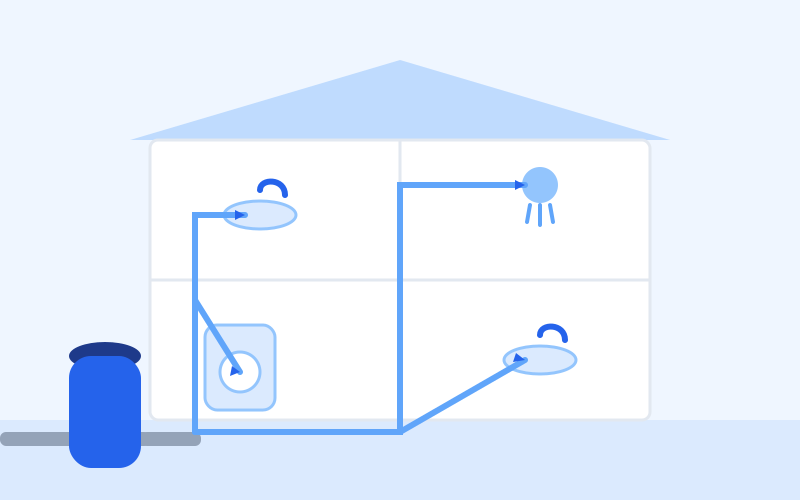
What "Whole House" Actually Means
A true "whole house" water softener system (often called a point-of-entry system) is installed where the main water line enters your home, treating all water before it travels to your water heater, showers, faucets, and appliances. This is in contrast to point-of-use systems, which only treat a single tap (like an under-sink filter or a countertop filter).
This page covers the physical side of ownership — where the unit goes and what it takes to get it running. If you're still deciding which type of system (salt-based, salt-free, or a filter combo) is right for your water, start with our water softener buying guide instead.
Space, Drain & Electrical Requirements
Before you buy, confirm your utility area or basement can actually accommodate the unit. Whole-house systems need:
- Floor space near the main line: Most systems require roughly 2–3 feet of clearance for the mineral tank and, on salt-based models, a separate brine tank next to it.
- A nearby drain: Salt-based softeners periodically regenerate, flushing brine and mineral-laden water down a drain line. You'll need a floor drain, utility sink, or standpipe within reach — this is the single most common installation blocker in finished basements.
- A standard electrical outlet: The control head that runs regeneration cycles needs power. Most units use a standard 120V outlet; a dedicated circuit isn't typically required.
- Bypass valve access: Installed systems include a bypass valve so you can route water around the unit for maintenance or if it needs servicing, without shutting off water to the whole house.
Larger combo systems (filter + softener, or well water combo units) have a larger physical footprint and a higher-capacity drain connection than a standard softener, since they're processing more media and more frequent backwash cycles — factor in a bit more clearance if your sizing points toward one of those. See our system comparison for which sizing tier applies to your home.
Installation: DIY vs. Plumber
Depending on your plumbing experience, you might choose to install a whole-house system yourself. Quality manufacturers like SpringWell design their systems to be DIY-friendly for those with basic plumbing knowledge — the process is mostly cutting into the main line, adding the bypass valve, and running the drain and electrical connections.
However, if you are uncomfortable cutting pipes or if your home lacks an easily accessible main water loop, hiring a professional plumber is highly recommended. Professional installation typically adds $300 to $1,500 to the total cost, depending on your region and the complexity of the pipe routing.
What Changes After Installation
Once the system is in and the bypass valve is opened, softened water reaches every fixture in the house immediately — there's no gradual transition. Expect a noticeably slicker feel to tap water (a sign the minerals are actually being removed, not a leftover soap film), and plan on refilling the brine tank with salt every few weeks depending on household size and hardness level. The unit will also periodically run a regeneration cycle, usually overnight, during which soft water may briefly be unavailable.